

Alright, let's have a proper chat about this one, because I reckon it's overdue.
Walk into any gym changing room and you'll hear these three words thrown about like everyone knows exactly what they mean: creatine, collagen, omega-3. They've become so normal, so default, that most people take them without ever really asking the obvious question — what are they actually doing in there? Not the marketing version. Not the vague "supports performance" line on the back of the tub. The actual, honest answer.
So let's sort that out properly, shall we? No jargon, no waffle, just a straightforward look at what's going on beneath the surface.
[Heading 2] Creatine: The One Everyone's Heard Of, Few Actually Understand
Creatine gets a bit of a reputation, doesn't it? Some people think it's some sort of shortcut, others think it's only for bodybuilders chasing size. Neither is quite right.
Here's the simple version. Your muscles use a molecule called ATP for quick bursts of energy — think heavy lifts, sprints, that last rep you're grinding out. The trouble is, your body's natural stores of ATP run out fast, within seconds really. Creatine helps replenish that energy supply more quickly, which in plain English means you can push out a few more reps, recover a touch faster between sets, and maintain intensity for longer before you hit the wall.
It's not magic. It won't build muscle on its own while you sit on the sofa. But paired with consistent training, it's one of the most well-studied, well-evidenced tools going for supporting strength and power output. No smoke and mirrors, just solid, dependable support for the graft you're already putting in.
[Heading 2] Collagen: More Than Just a Buzzword for Skin
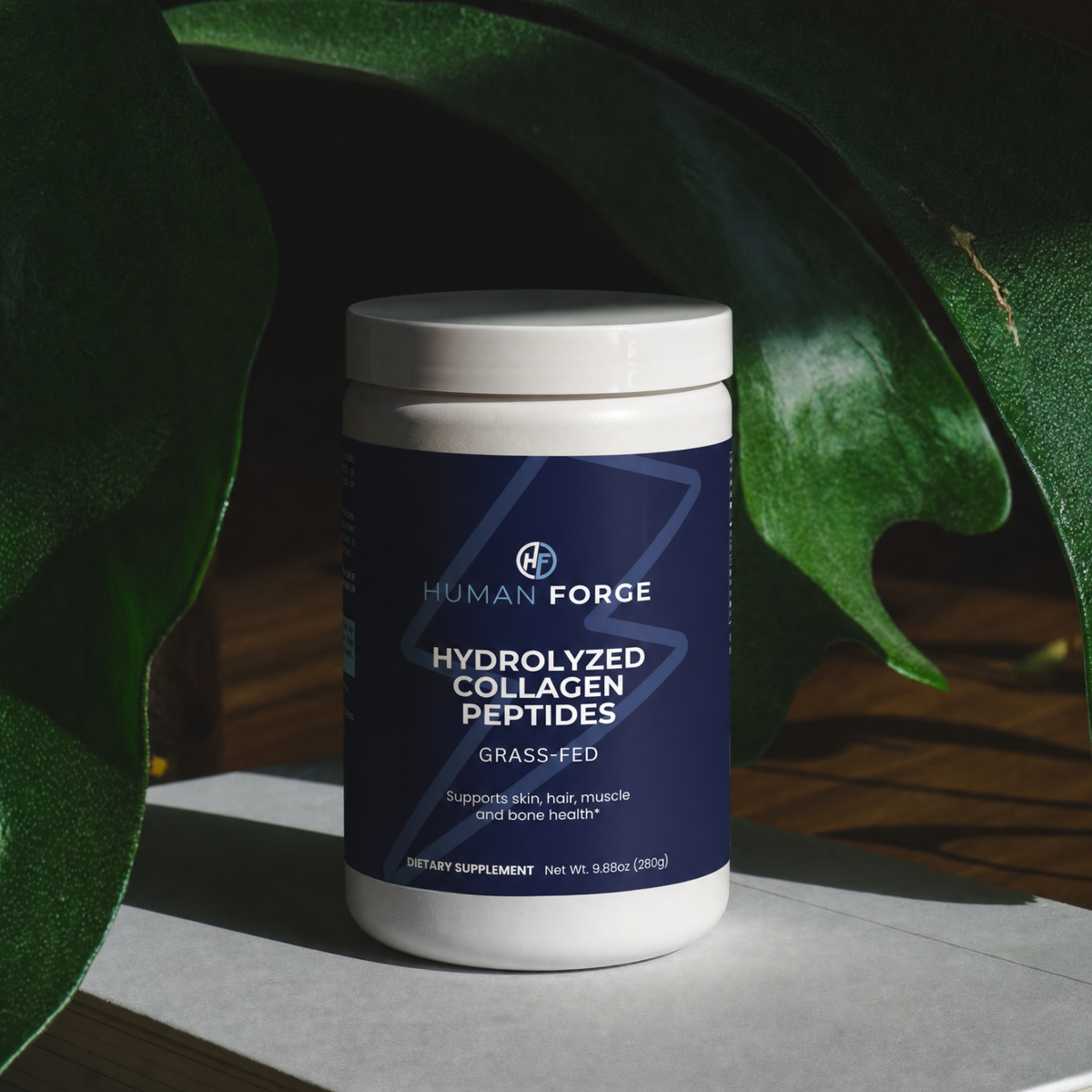
Collagen tends to get filed under "beauty supplement" in people's heads, largely thanks to how it's marketed elsewhere. But here's the bit that often gets missed — collagen is the most abundant protein in your entire body, and it's absolutely everywhere that matters for someone who trains: your joints, tendons, ligaments, and connective tissue.
As you push your body harder, that connective tissue takes a proper hammering. It's under constant load, constant stress, and over time that wear adds up. Hydrolysed collagen peptides — essentially collagen broken down into a form your body can actually absorb and put to use — help support the structural integrity of that tissue. So while your muscles are busy getting the glory, collagen's quietly working away on the scaffolding that holds the whole operation together.
Think of it this way. You wouldn't build an impressive house on a dodgy foundation and hope for the best. Same principle applies here.
[Heading 2] Omega-3: The Unsung Hero You're Probably Underrating
Right, omega-3. This one doesn't get nearly the attention it deserves, mostly because it's not flashy. There's no "one more rep" story attached to fish oil. But don't let that fool you into thinking it's doing less important work.
Omega-3 fatty acids play a role in supporting your heart, your brain, and — relevant to anyone training regularly — helping the body manage the inflammation that naturally comes from hard training. Push yourself hard enough, often enough, and your body's inflammatory response ramps up as part of the repair process. That's normal and expected. But keeping that response balanced rather than letting it run wild is where recovery, focus, and long-term wellness genuinely benefit.
It's the sort of ingredient that won't give you a dramatic before-and-after. It's steadier than that. Quieter. But over months and years of consistent training, it's doing a lot of unseen, unglamorous heavy lifting behind the scenes.
[Heading 2] So What Does This All Actually Mean for You?
Here's the honest truth: none of these three ingredients are a shortcut, and none of them work in isolation from the rest of your habits. Training hard, eating properly, sleeping well — that's still the foundation, full stop. What creatine, collagen, and omega-3 do is support that foundation from different angles. One helps you perform in the moment. One helps protect the structures that let you keep performing over years, not just weeks. And one helps keep the whole system running steadily in the background.
That's really the whole philosophy behind building a proper stack — not chasing the flashiest new ingredient on the market, but understanding what each piece is actually contributing, and choosing quality, evidence-backed formulations that genuinely earn their place in your routine. No gimmicks. No unnecessary complexity. Just ingredients that do what they say on the tin, working together in support of the bigger picture.
Because at the end of the day, your training gets you started. What you put into your body afterwards is often what determines how far you actually get.
Know what's in your stack, and know why it's there. That's not just good practice — it's the difference between hoping for progress and actually building it.



Leave a comment
This site is protected by hCaptcha and the hCaptcha Privacy Policy and Terms of Service apply.